The label, the cloth, the room.
Three things repeat across the photographs supplied for this study. This page holds each one separately.
A woven label stitched inside collars and hoods, a tote bag cut from patterned cloth, and a plain workroom where garments are opened for the camera. Each section below opens and closes on its own; the first is open to start. With JavaScript disabled, all three stay open.
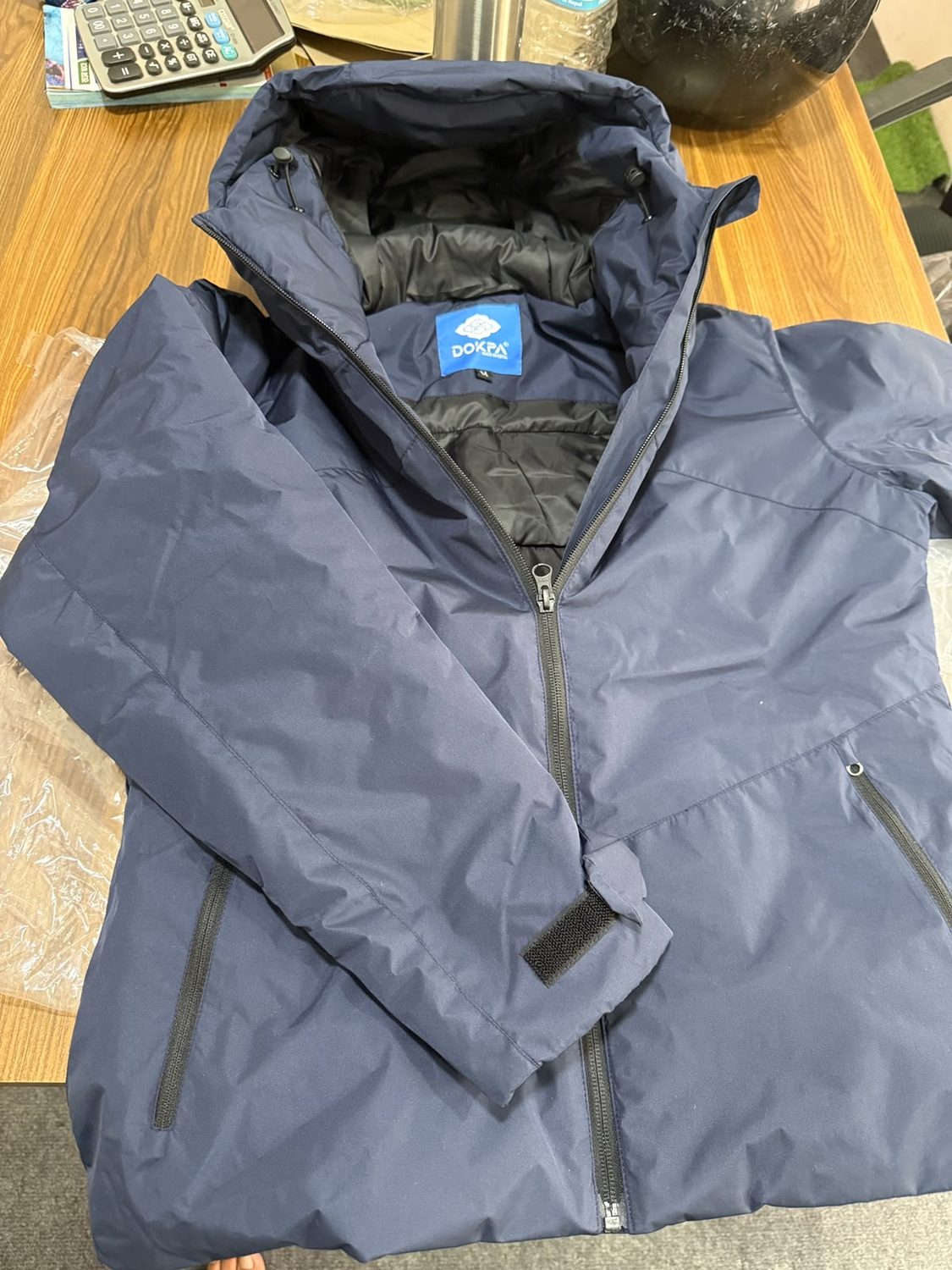
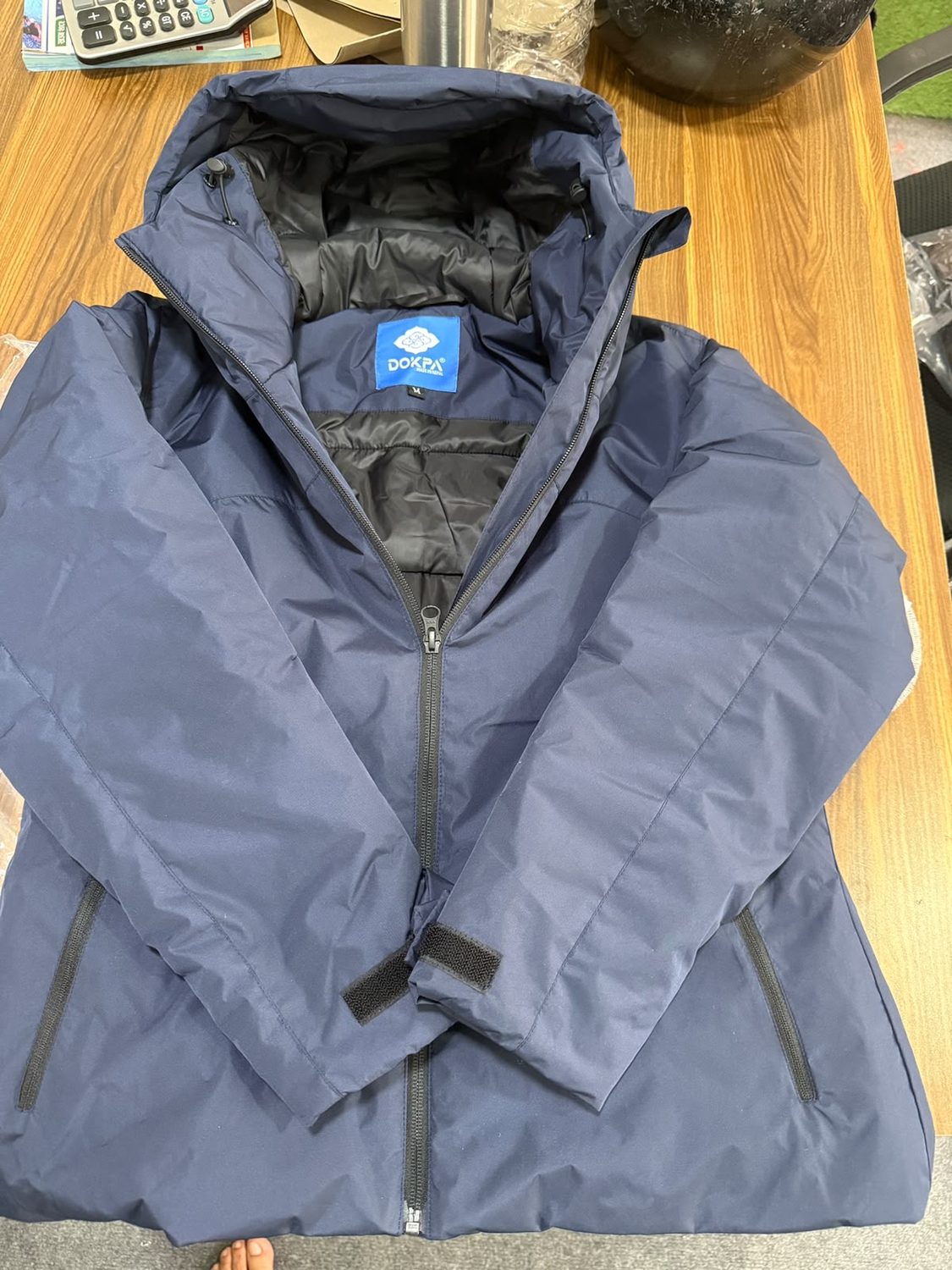
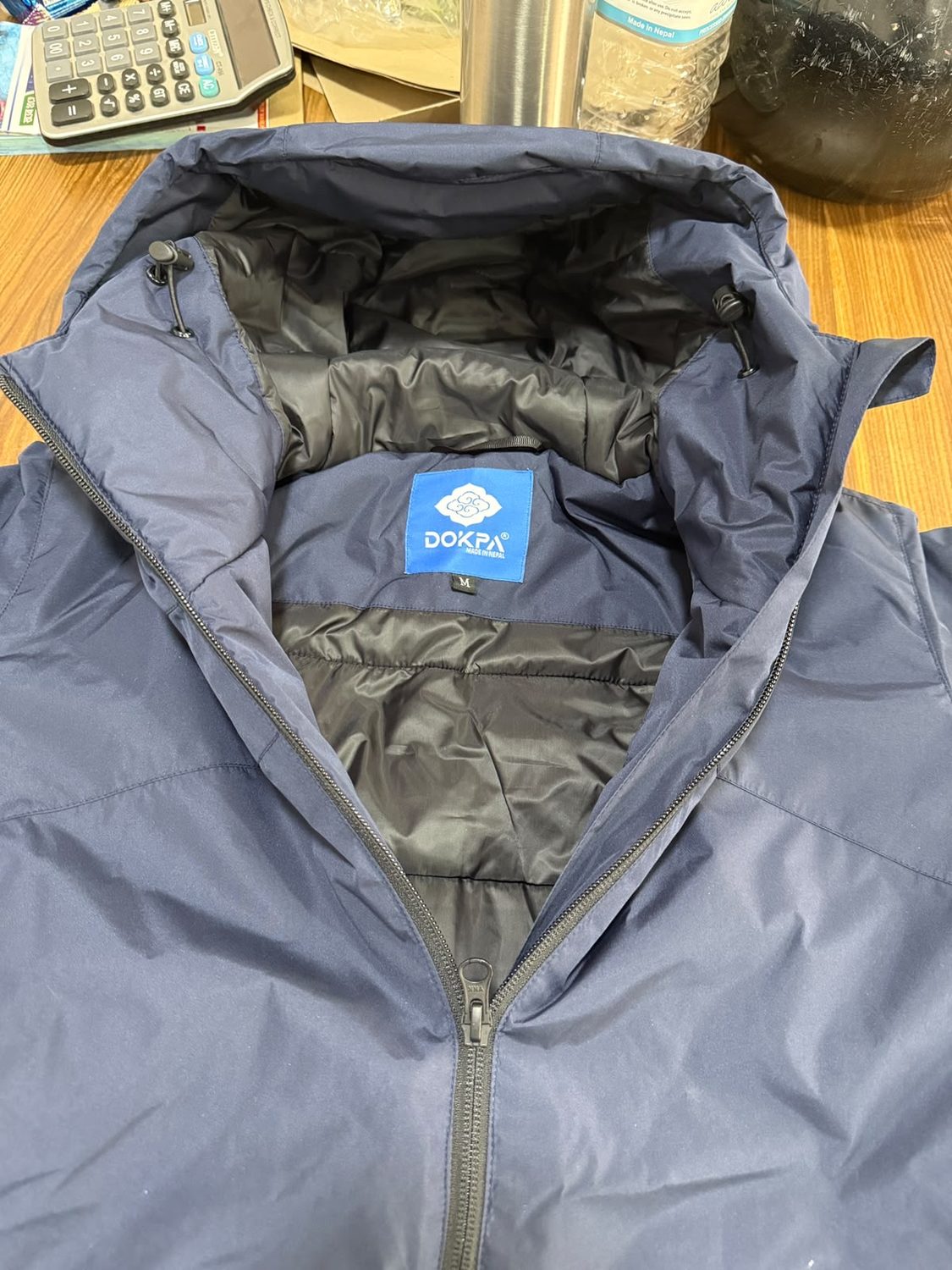
The label itself is a small woven rectangle on a bright blue ground. Above the wordmark sits a small stylised emblem in white, and what it depicts is not described here, since it cannot be read with confidence at this size. Below the emblem, in white capital letters, is the word DOKPA followed by a registered mark symbol, and beneath that, in smaller type, the words MADE IN NEPAL. It is the same rectangle, the same blue, the same two lines of white text, every time it appears.
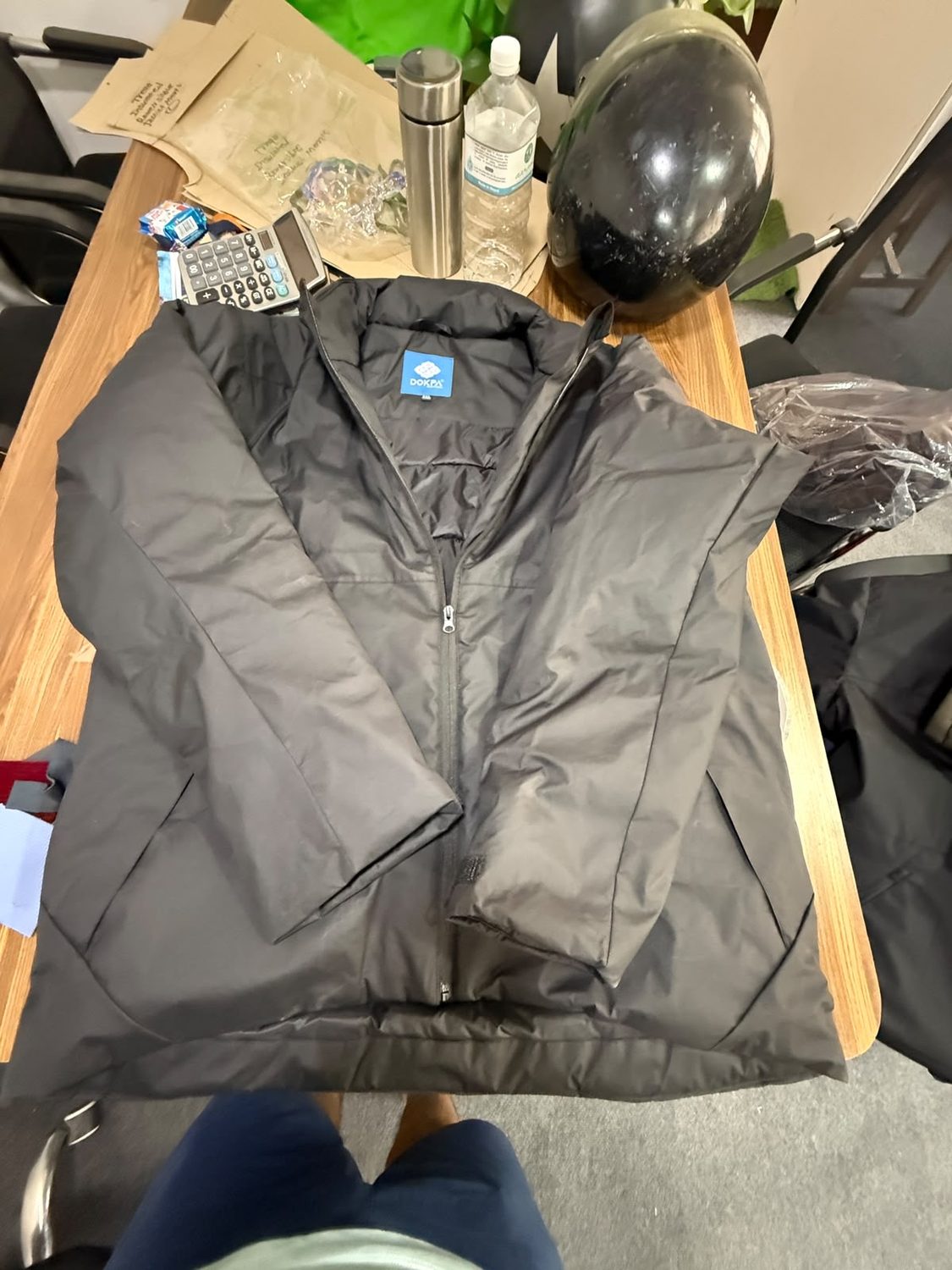
What ties this study's photographs together is not a shared cut or a shared color of cloth, since the garments pictured range from a navy hooded jacket to a grey insulated jacket to an off white shell. It is this one label, stitched at the inside collar in some photographs and inside the hood in others, always sitting in the same place relative to the zip. Four different garments, photographed on different surfaces, carry the same small rectangle.
Next to the woven label, on the navy jacket photographed with its collar open, sits a second, smaller white tag printed with a single letter, M. It is the only size marking visible anywhere in this set of photographs, on any garment, which is why this study does not publish a size range. One letter on one tag is evidence that a size M example exists. It is not evidence of a range.
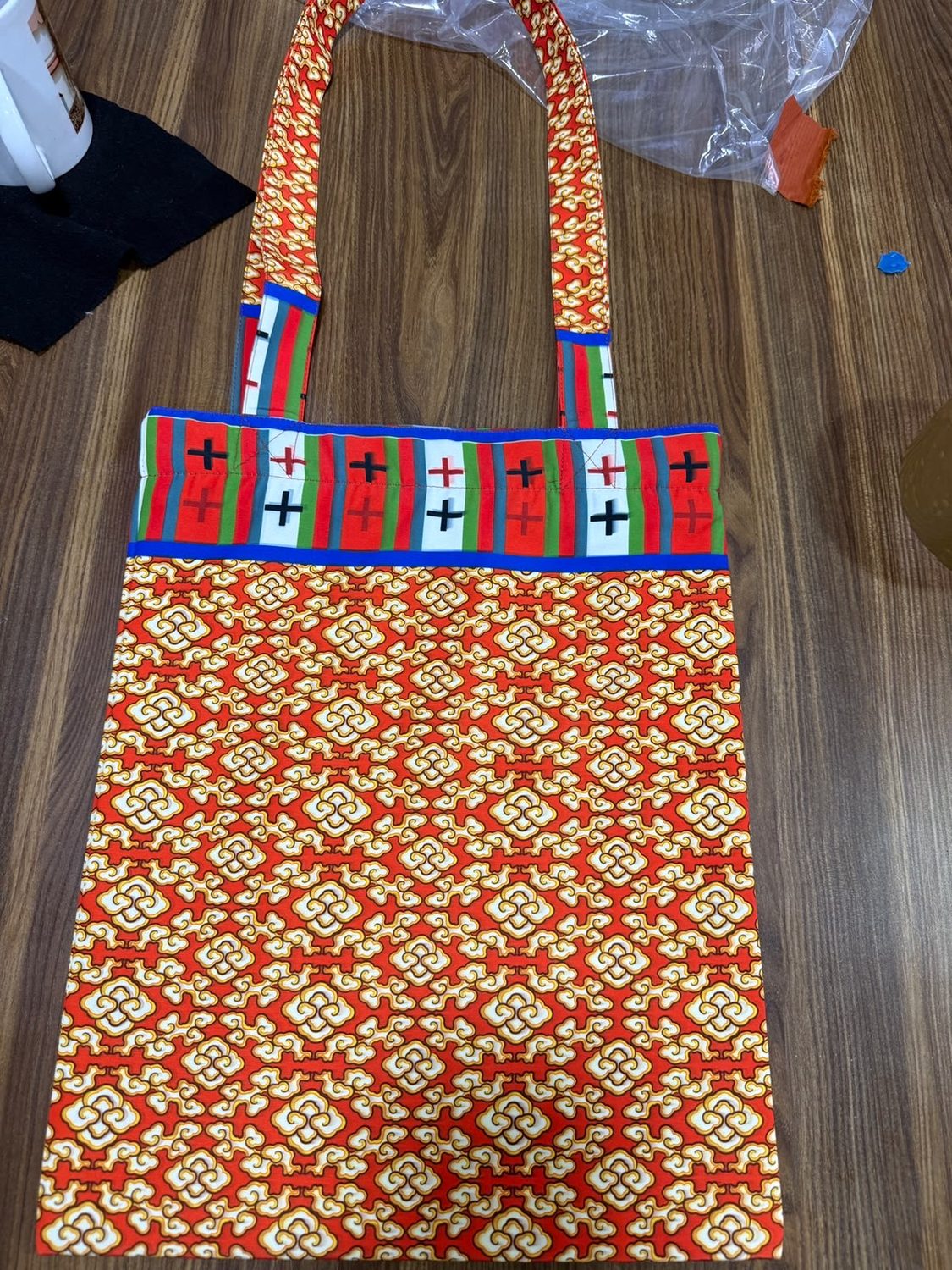
The tote bag is cut from a cloth patterned in red and gold, with a striped woven band running across the top. It is the only patterned textile in the supplied photographs, and it supplies the single warm accent color used across this study.
No fabric composition is stated in the supplied material, so none is claimed here. What is described is only what the photograph shows: color, pattern, and the woven band.
Garments are photographed open on a table or laid flat across a plain floor. The surfaces are unstyled: a wooden tabletop, ordinary flooring, daylight from somewhere out of frame. Nothing further about the room, its size, or its location within the workshop is confirmed by the supplied material.
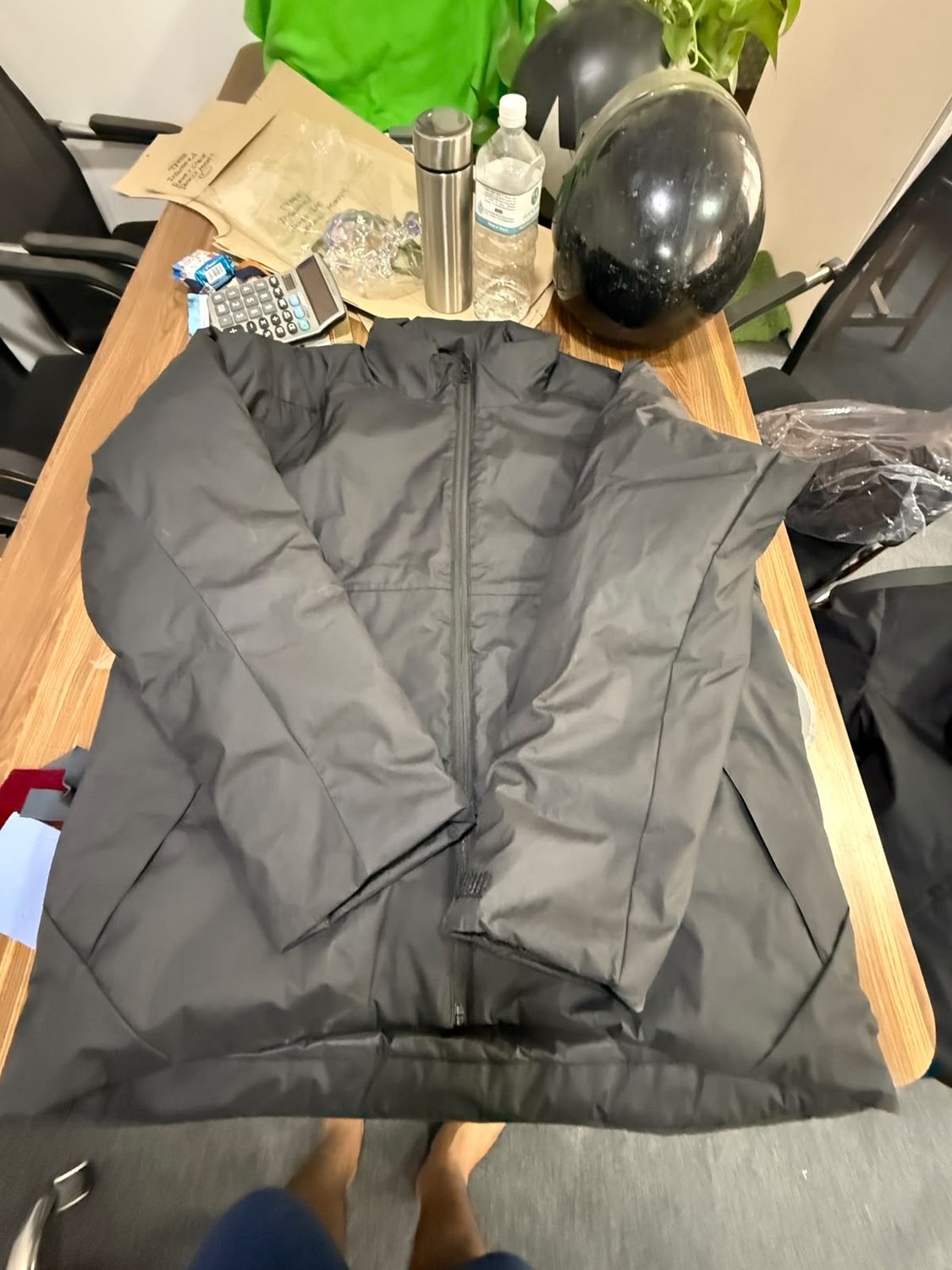
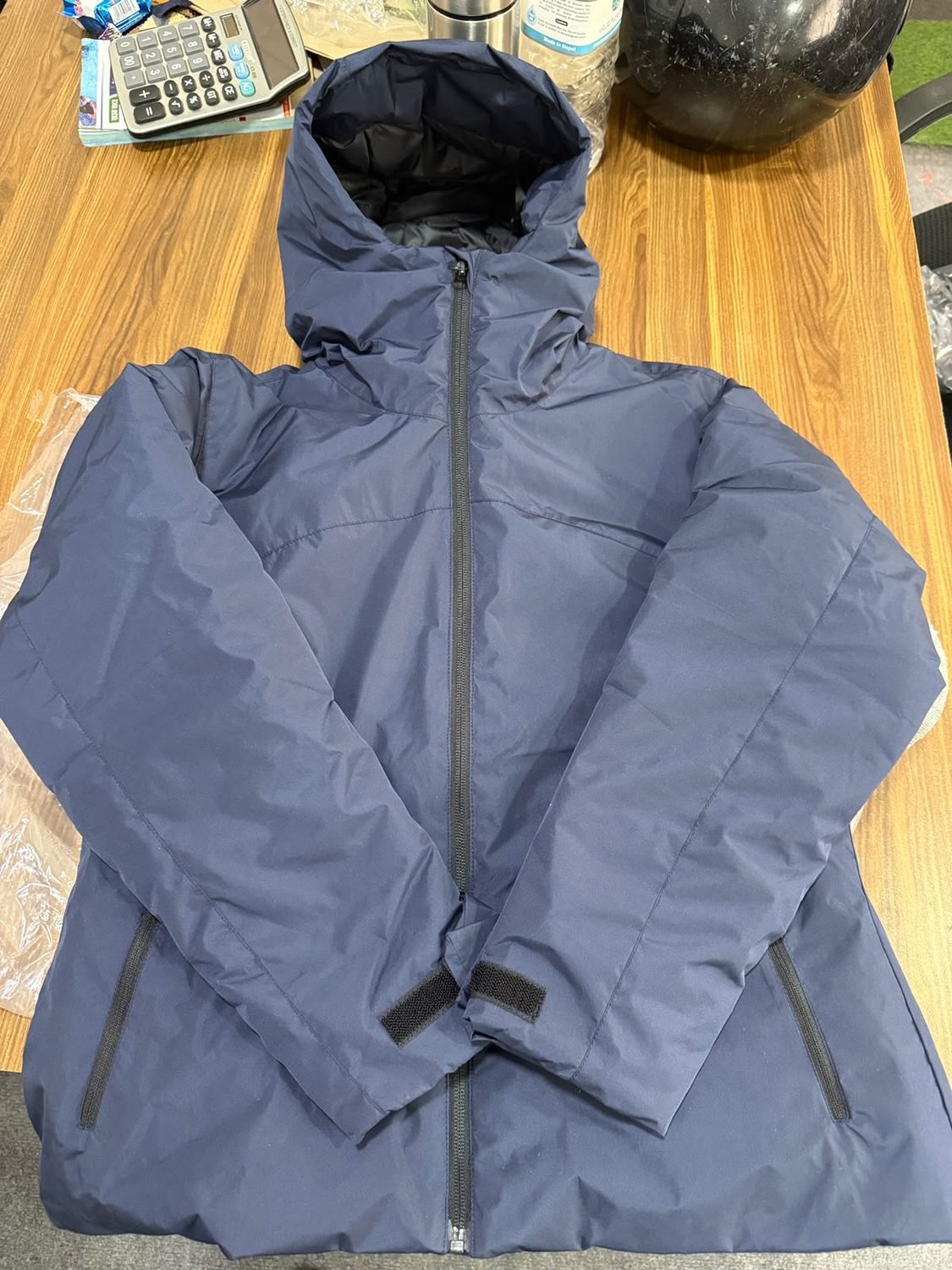
Cloth becomes cover. A pattern meant for a tote and a weave meant for a label meet on the same worktable, in the same plain light.
Details beyond what is pictured here, such as materials, sizing, fill, or capacity, are not published on this study and are pending confirmation from Dokpa Garment.