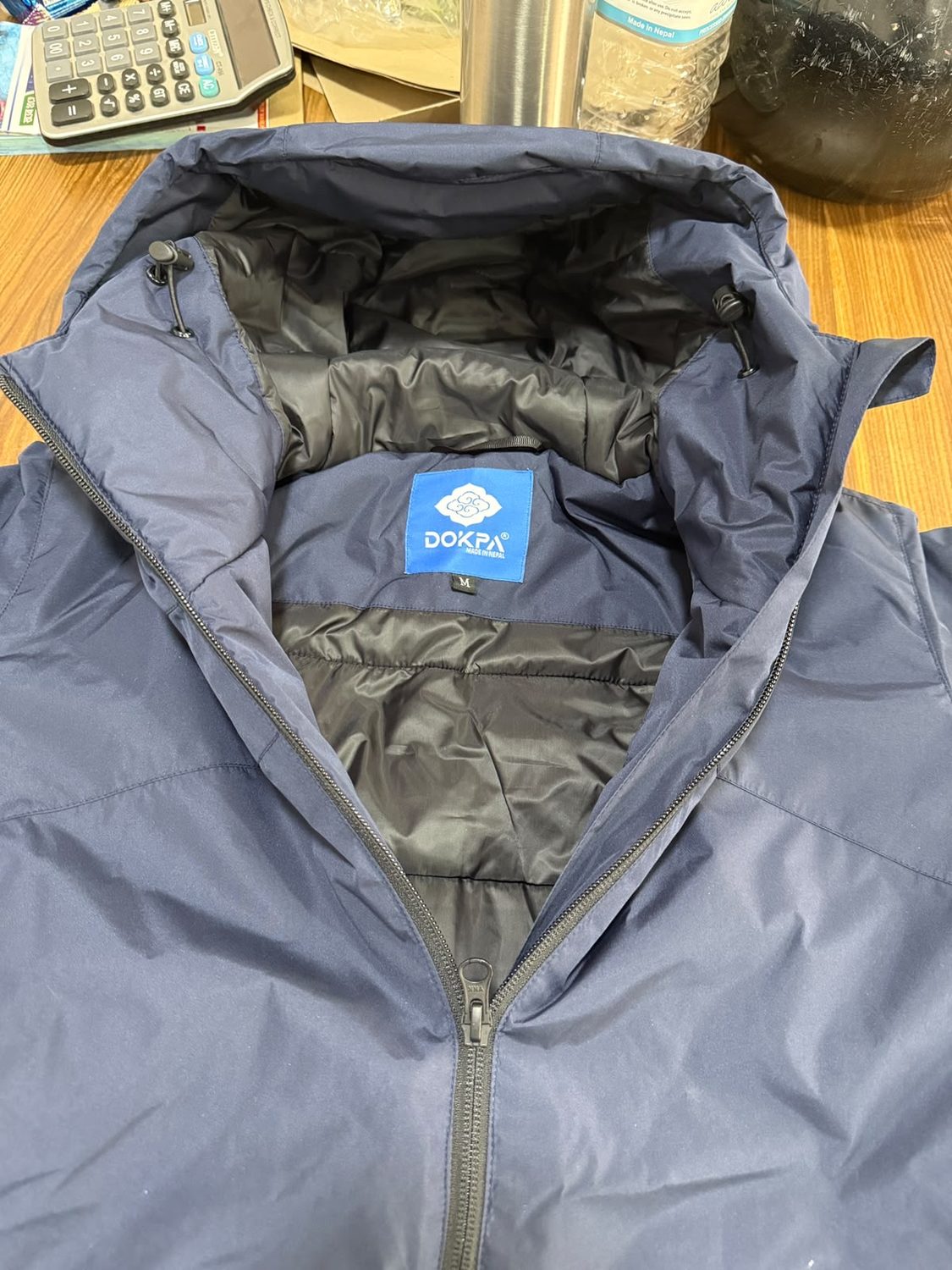
Made in Nepal, sewn into the hood.
Dokpa Garment is an apparel maker in Budanilkantha, Kathmandu, working in outdoor and cold weather clothing. This study follows what a set of supplied photographs actually show, a woven label, a patterned cloth, and a plain workroom table.
A wooden table, a workroom floor, a small blue label.
This is the centerpiece of the study: a close look at what a set of supplied photographs actually contains, rather than what a garment maker's website usually asserts. No garment here is worn or modeled. Every one is laid flat or held open on an ordinary surface, a wooden table in some frames and a grey carpeted floor in others, with the everyday clutter of a working room sitting at the edges. Reading that plainness carefully, image by image, is what this page is for.
On the table
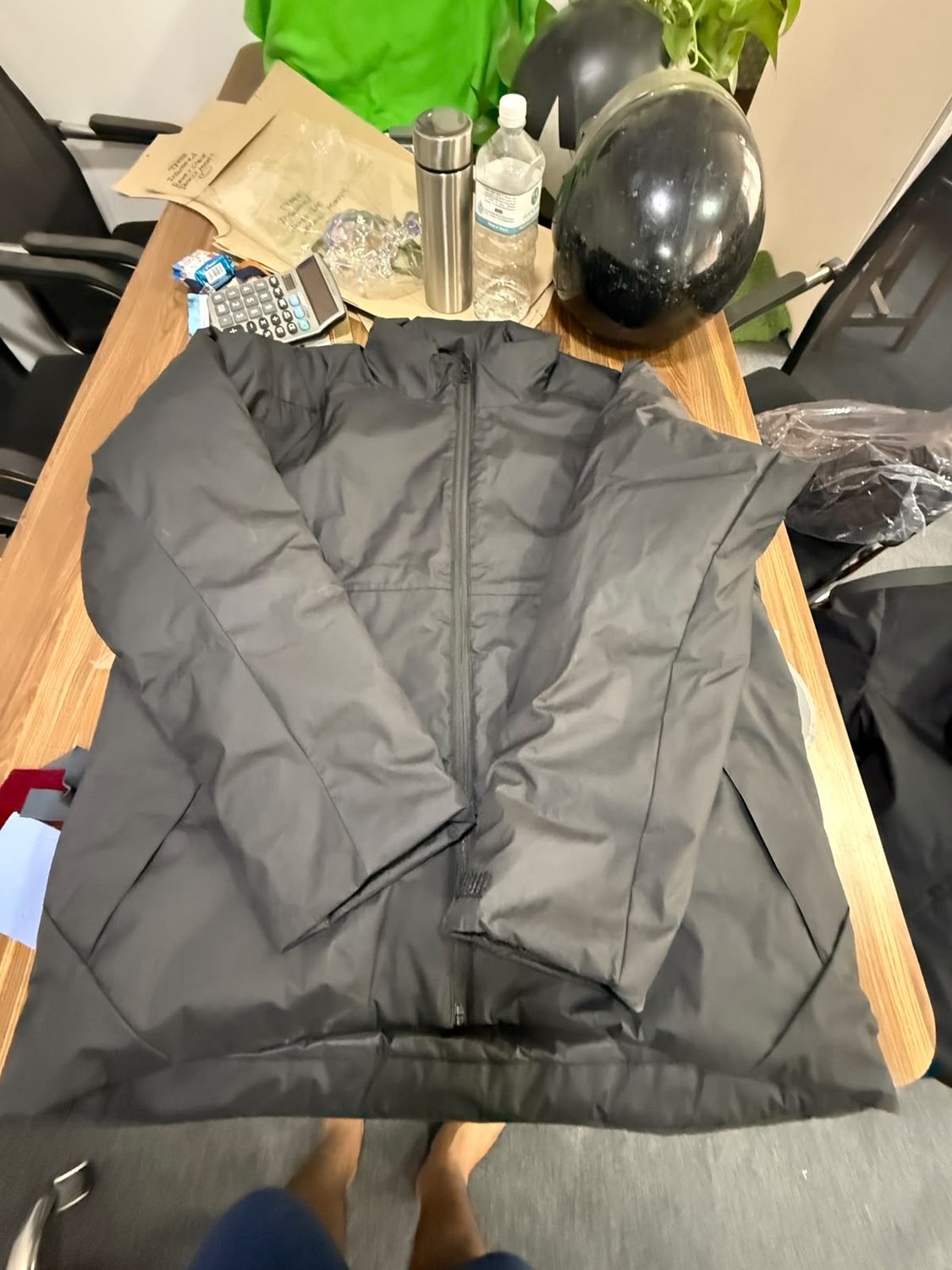
A dark grey insulated jacket, held open on a workroom table, is where this study begins. In the same frame, at the top edge, sit a pocket calculator, a metal flask, a plastic water bottle, and a black motorcycle helmet, none of them arranged, all of them simply left on the table while the jacket was photographed. The table itself shows real wood grain, not a seamless studio backdrop.
It is here, opened flat like this, that the inside of the garment becomes visible: the lining, the seams, and the woven label described on the next page.
On the floor
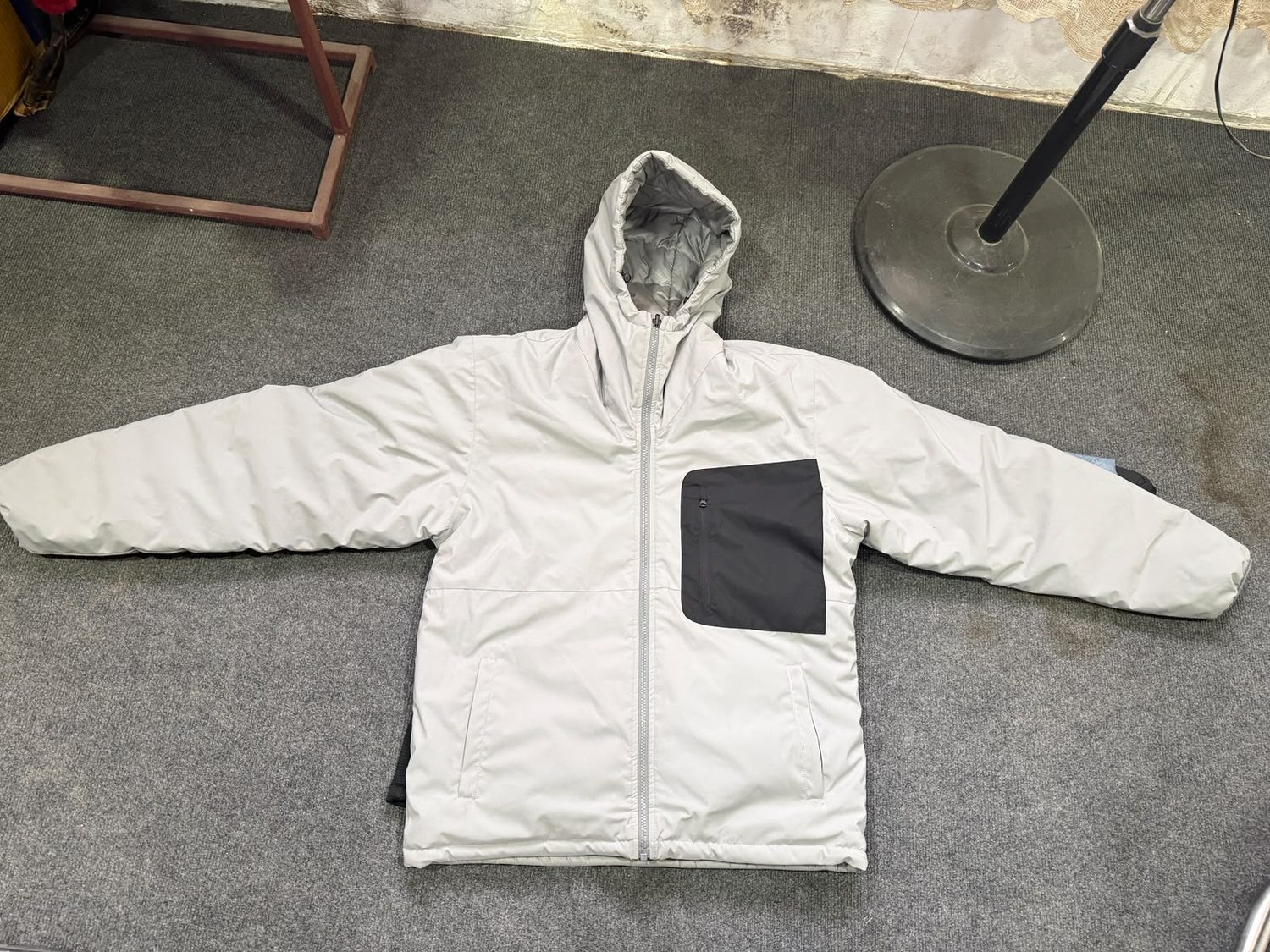
Other garments are laid across a plain grey carpet instead of the table. In this photograph the carpet reaches the edge of the frame, where a wooden framed stand and the round metal base of what reads as a lamp or a chair sit half in view. Nothing about the room's size or its place in a larger building is visible beyond what these two surfaces show.
Laid flat, not modeled
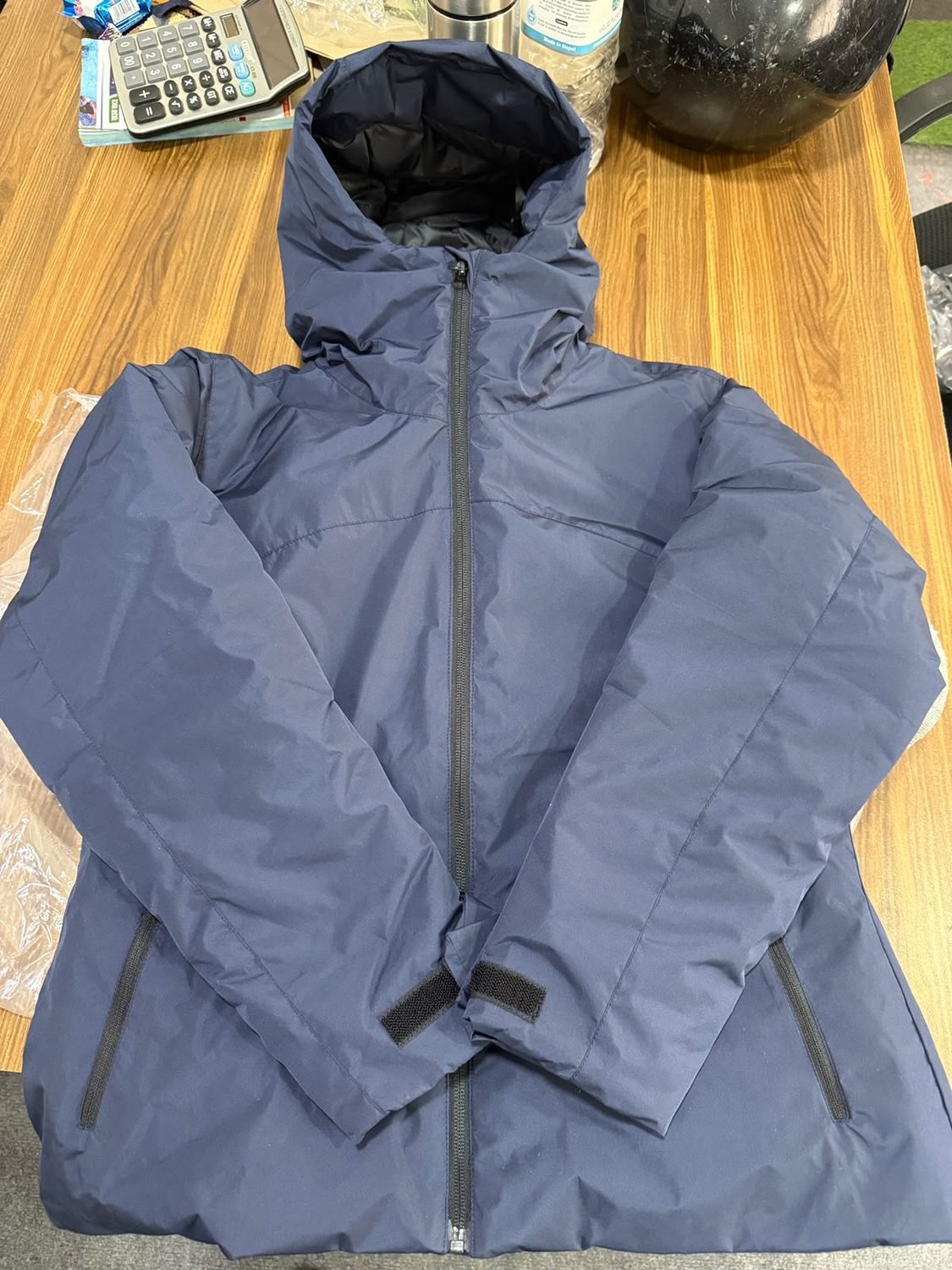
Every garment in the supplied photographs is laid flat or held open rather than worn, hoods spread out, zips closed, sleeves straight. It is a plain, practical way to photograph outdoor clothing, and it keeps the construction in full view: the panels, the stitching, the shape of a hood before anyone puts it on.
What this plainness shows is a working room where product photographs are taken with whatever surface and whatever objects happen to be nearby. What it does not show is anything about the size of that operation, how many people work there, or how the room relates to the rest of the building. A calculator and a flask on a table are evidence of a workspace, not evidence of scale.
A label is a small thing to carry a country's name. Stitched in blue thread inside a hood, DOKPA and MADE IN NEPAL sit unseen until the hood is turned out to the light.
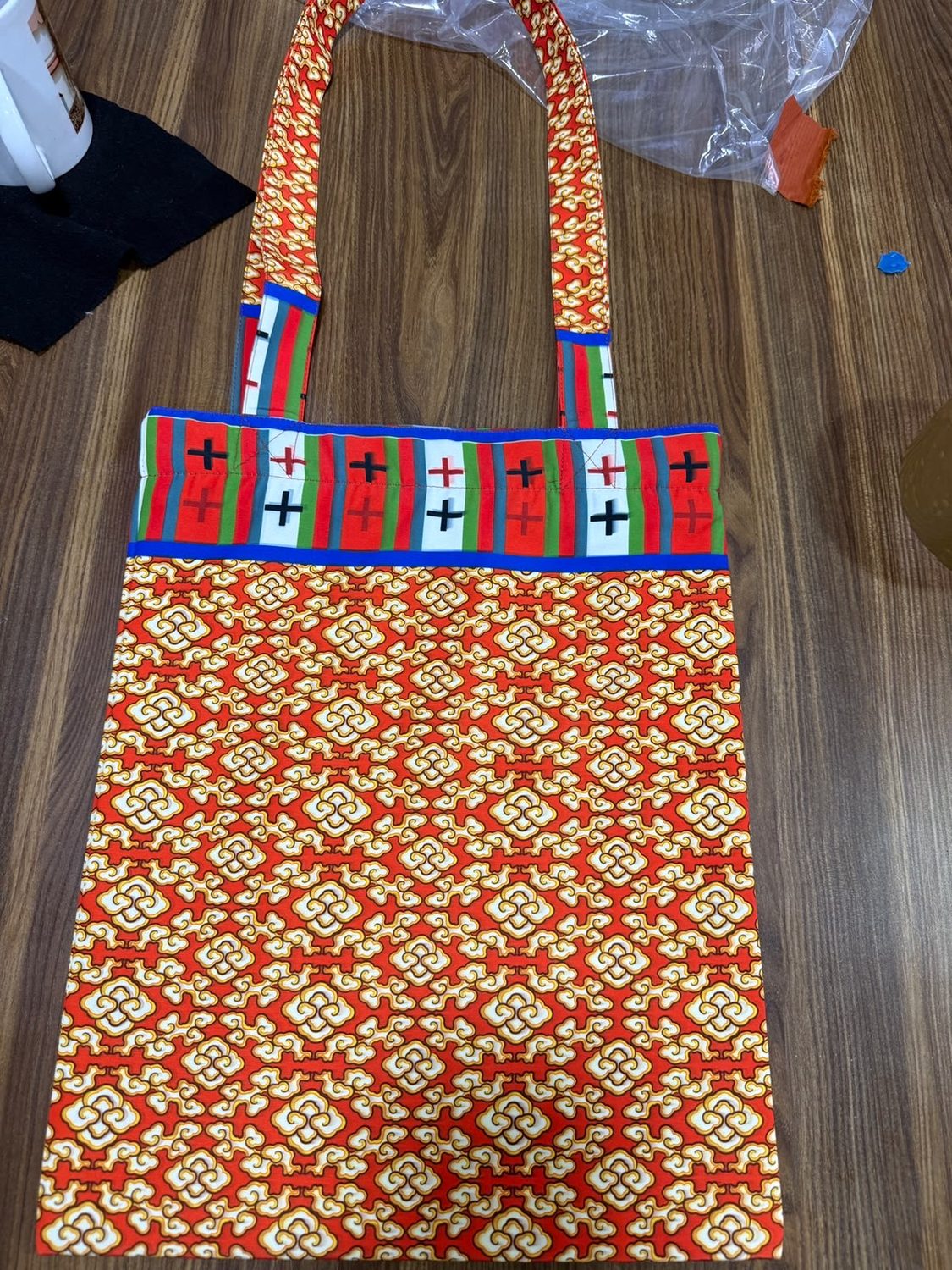
A tote bag of red and gold patterned cloth supplies the one warm color this study borrows.